
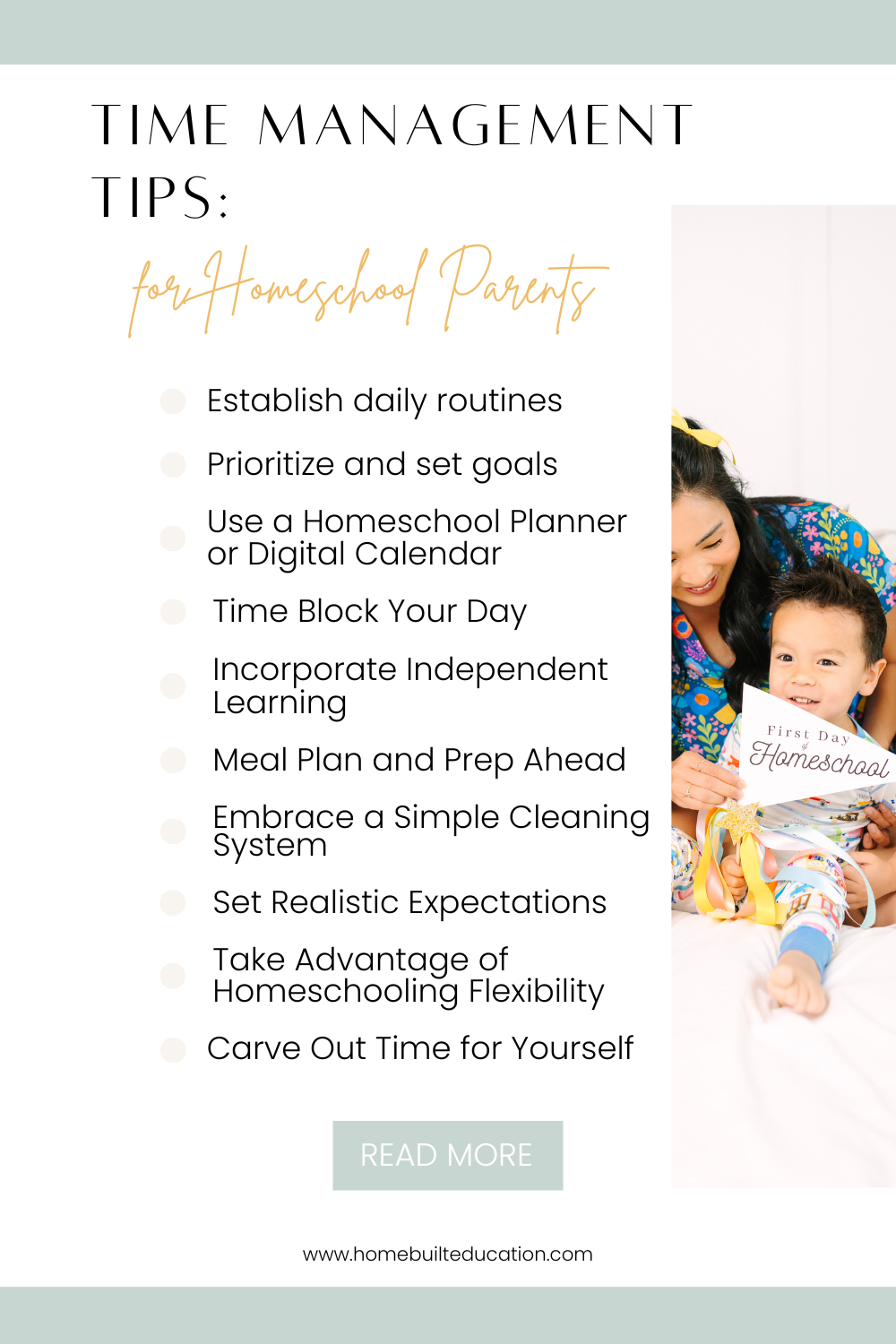
Time Management Tips for Homeschooling Parents

Homeschooling is a full-time commitment, and balancing lessons, household responsibilities, and personal time can feel overwhelming. Effective time management is key to maintaining a smooth and stress-free homeschooling experience. Here are some practical tips to help you stay organized and make the most of your day.
1. Establish a Daily Routine
Having a structured daily routine helps keep everyone on track. While flexibility is important, a general schedule provides consistency. Consider:
Morning routine: Breakfast, chores, and a structured start to the school day.
Learning hours: Set a dedicated time for core subjects and activities.
Breaks and downtime: Include recess, free play, or quiet reading time.
Evening wrap-up: Family time, meal prep, and preparing for the next day.
2. Prioritize and Set Goals
Not everything needs to be done in one day. Identify your top priorities and break them down into manageable tasks. Consider:

Setting weekly learning goals for each child.
Identifying must-do vs. nice-to-do tasks.
Allowing room for flexibility when unexpected events arise.
3. Use a Homeschool Planner or Digital Calendar
Whether you prefer a paper planner or a digital tool like Google Calendar or the Skylight Calendar, keeping track of lessons, assignments, and appointments helps you stay organized. A good planner can help:
Schedule lessons by subject and child.
Track extracurricular activities.
Note important deadlines and homeschooling requirements.
4. Time Block Your Day
Time blocking is an effective way to divide your day into focused chunks of learning and tasks. For example:
8:00–9:30 AM: Math and Language Arts
9:30–10:00 AM: Snack and movement break
10:00–11:30 AM: Science or history
11:30 AM–12:00 PM: Outdoor time
Grouping similar tasks together can help maintain focus and efficiency.

5. Incorporate Independent Learning
Teaching multiple children or balancing work with homeschooling? Encourage independent learning by:
Using online programs like Khan Academy, IXL, or Outschool.
Assigning independent reading or journaling.
Providing workbooks and hands-on projects they can do alone.
6. Meal Plan and Prep Ahead
Mealtime can be a major time drain. Simplify it by:
Meal planning at the start of the week.
Prepping lunches and snacks in advance.
Using easy, crockpot or one-pan meals on busy days.
7. Embrace a Simple Cleaning System
Household chores don't have to take over your day. Implement:
A 15-minute power clean in the morning and evening.
A chore chart where kids help with daily tasks.
A laundry schedule to avoid overwhelming piles.
8. Set Realistic Expectations
You don’t have to recreate a traditional school day at home. Learning happens in many ways, and some days will be more productive than others. Give yourself grace and remember:
Shorter, focused lessons can be more effective.
Life skills (cooking, budgeting, and home maintenance) count as learning.
Some days will be for exploring and hands-on activities.
9. Take Advantage of Homeschooling Flexibility
One of the biggest perks of homeschooling is the ability to adjust your schedule. Don’t be afraid to:
Do school in the afternoon if mornings are tough.
Take learning outside for a change of pace.
Travel or adjust your calendar to fit your family’s needs.
10. Carve Out Time for Yourself
Homeschooling parents need breaks too! Avoid burnout by:
Waking up a little earlier for quiet time.
Scheduling a weekly self-care activity.
Joining a homeschool support group for encouragement.
More than anything… Find your Fit!
Time management in homeschooling is about finding a balance that works for your family. By setting realistic goals, using schedules wisely, and embracing flexibility, you can create a fulfilling homeschool experience without feeling overwhelmed. Remember, progress is more important than perfection!
